Adam Melničák, HCI researcherand product designer
I work in digital health: technologies that help people care for their mental and physical health. As a researcher, I study how to design them. As a product designer, I help build them.
I work in digital health: technologies that help people care for their mental and physical health. As a researcher, I study how to design them. As a product designer, I help build them.

Faculty of Informatics and Statistics
PhD in Applied Informatics (HCI)

Orbiso
Product design

National Institute of Mental Health, Czechia
Research and design of a digital intervention

Why did I react like that? What was my child going through? And what would I do differently next time?
Parenting brings difficult moments in which we act faster than we think. Parents often return to these situations only later, alone and without support, and do not know how to deal with them. Professional help is often far away, expensive, or comes with long waiting times.
I am interested in how technology could help parents return to such a situation, process it and see it differently. In the long term, I want to design a digital tool that parents can use on their own, ideally without a therapist (or alongside one). It is not meant to be a big app for everyone. Rather, it is a small aid that parents can lean on when working with emotions.
Why emotions
I am interested in how technology can help people with their emotions.
Digital interventions and tools for mental health often draw on cognitive behavioral therapy (CBT). It is a useful and well-researched approach. It works mainly with what we think and what we do.
I feel closer to working with emotions. Partly because it is a less explored area, and partly because many of the therapists around me work with emotion-focused therapy. They show me that an emotion needs to be felt and understood, not only thought through.
The aim is a set of design principles for technologies that work with emotions, and a prototype to test them.
01Map the field
Submitted to a journal
A systematic review of 28 studies on digital support for parents that works with emotions.
02Understand
Now: preparing the study
Qualitative research with parents and with professionals who work with children and families. The format is still being refined.
03Design and evaluate
Q3 2027
Design principles, a prototype and a short study with parents.

Orbiso is an eHealth platform developed by Masaryk University, the Masaryk Memorial Cancer Institute and the agency Bindworks (where I work).
The platform lets health professionals and other experts turn their care into a digital program. Patients and clients then go through it step by step in a mobile app, also outside the clinic or session. The programs help them understand their care, manage prevention or change specific behaviors.
Who it is for
Orbiso is built for professionals who want to support their patients and clients. They do not need to know how to build apps. They bring their expertise and experience with the topic, and the platform handles the technical side.
As a product designer, I design the whole authoring side of the platform. This is where authors create a program and send it to their patients and clients.
It guides them from the first idea through the program structure to the content: texts, videos, tasks, questionnaires and other formats. AI helps authors turn their own materials and experience into a program structure. The authors always decide on the content.
 How to create a digital programme from your own professional practiceMy article on how the authoring environment guides professionals from their practice to a finished program.(opens in a new tab)

DigiWELL is a research project of the National Institute of Mental Health on digital technologies and wellbeing. It includes an app for the general public that helps people care for their everyday wellbeing.
The app is based on goal-setting theory. Each week it offers one topic: a short text and a few practical steps for everyday life. It is not a clinical tool. It is a guide grounded in co-design research with people who use wellbeing apps.
I contribute to both the research and the app itself. I helped prepare the co-design focus groups, took part in them and contributed to their analysis.
On the app side, I take care of UX and the technical preparation. I design the program structure and user journeys and write the functional specification for development.
I am now preparing content for two topics: living with a chronic illness and emotions in parenting. The second one connects directly to my dissertation.
Both Support and Burden: a co-design studyPreprint, submitted to JMIR Human Factors(opens in a new tab)Topics I am preparing
Publications
2026
2026
About
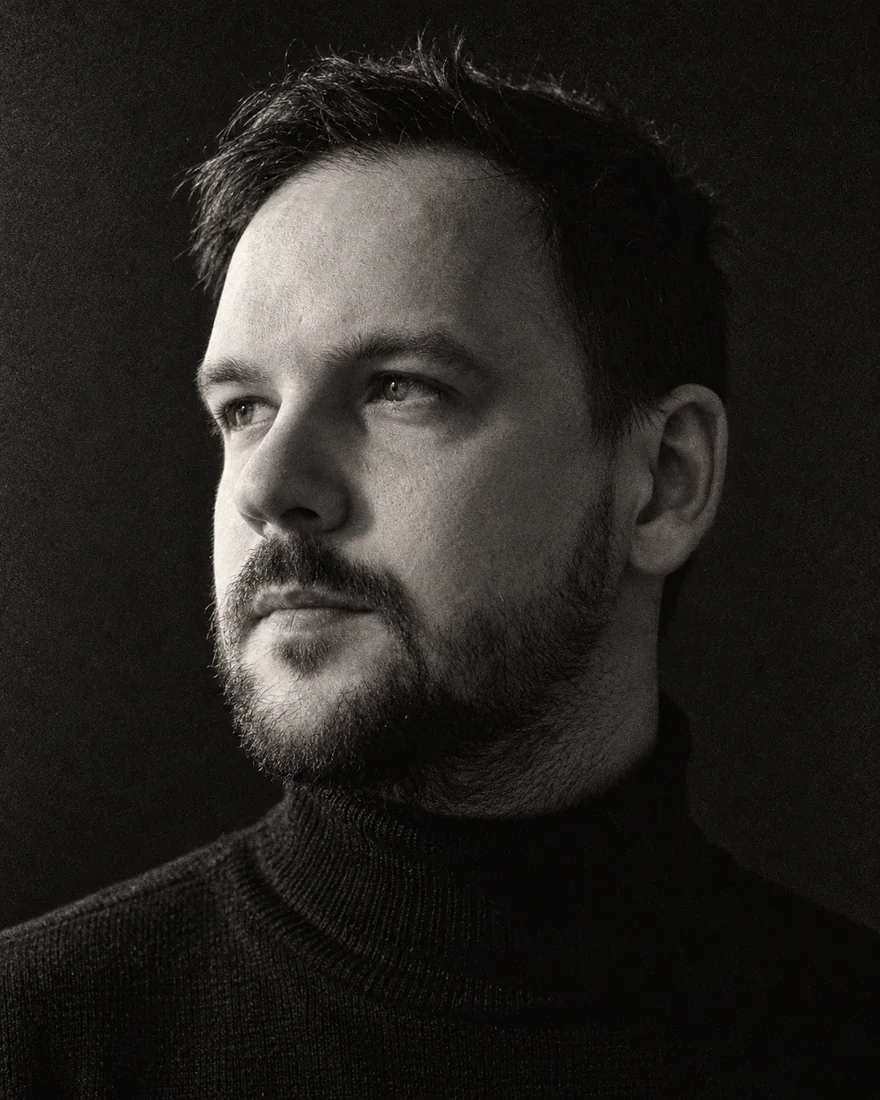
I am Adam Melničák and I live in Prague. I work in digital health and eHealth. I am interested in how to design digital tools that help people care for their mental and physical health.